Neforma #124
Cene Resnik, Hana Obreza, Lana Kariž Meško in Ida Hiršenfelder (beepblip)
On January 8th 2026, I attended the Neforma event that took place in Španski Borci.
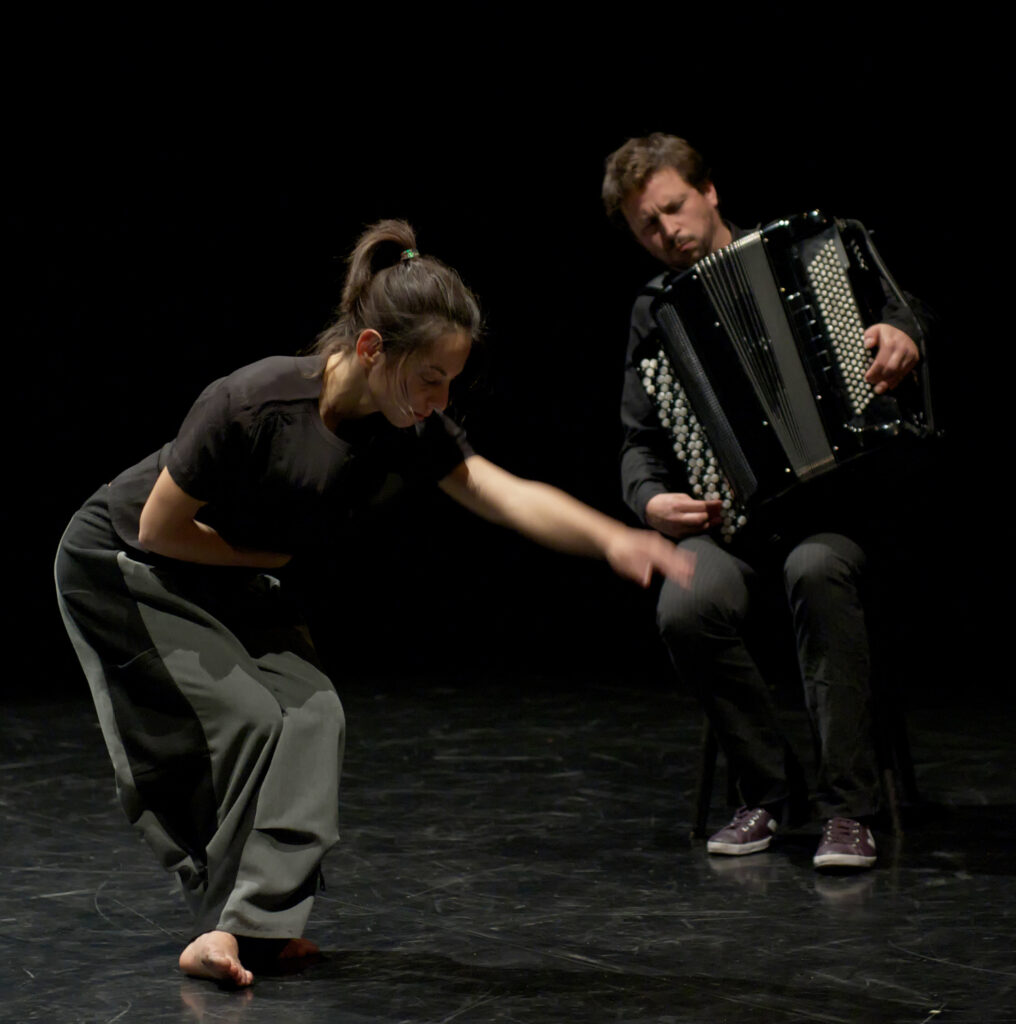
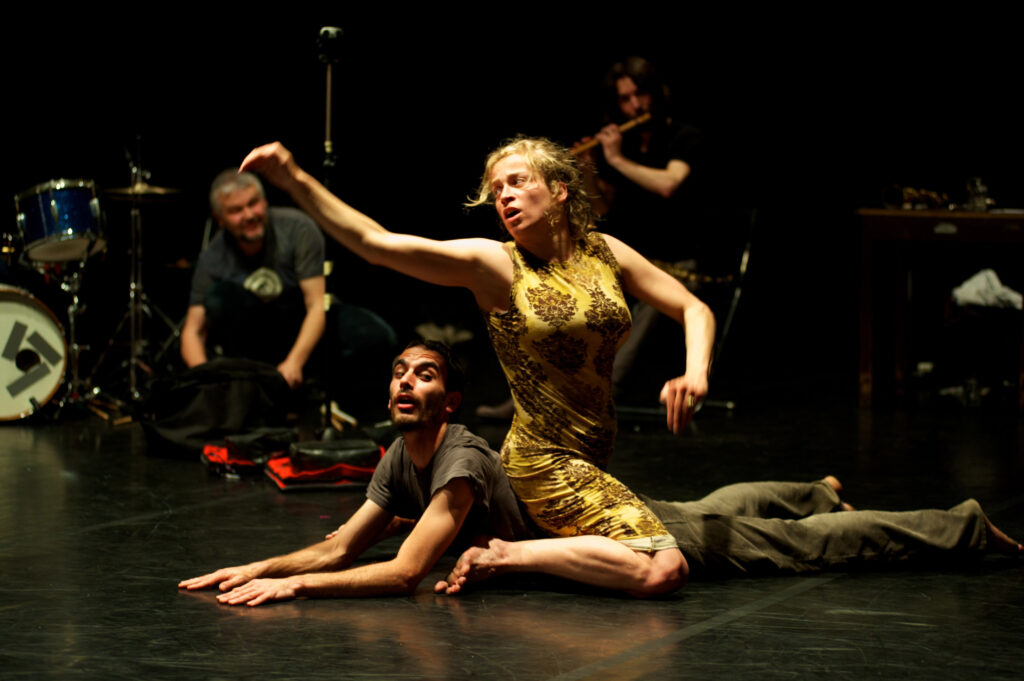
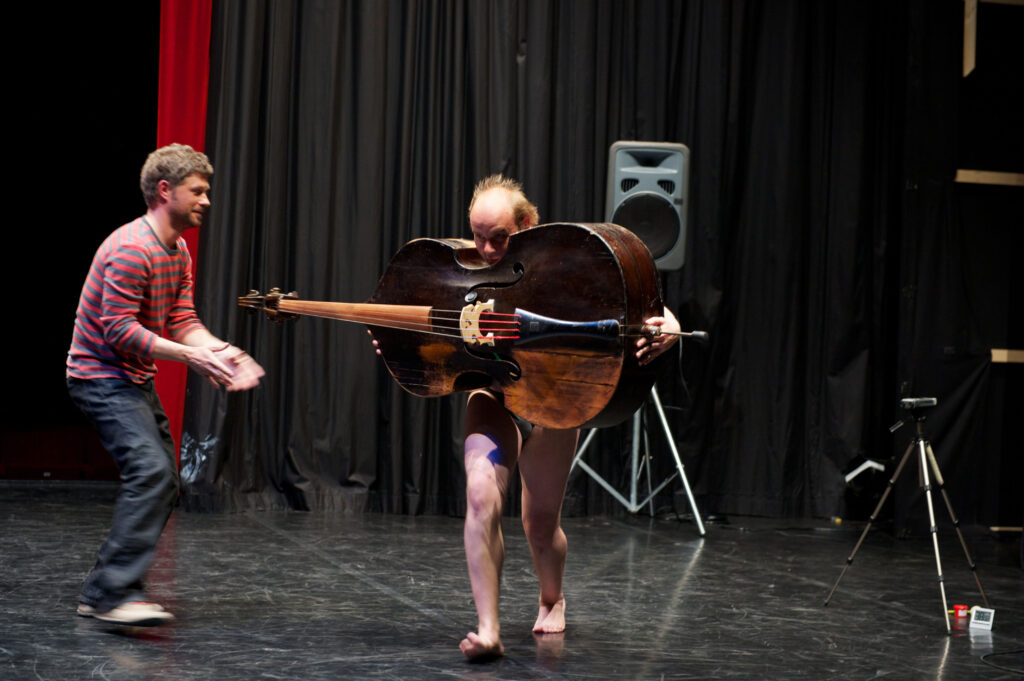
The evening was a blind date between two musicians (Cene Resnik and Ida Hiršenfelder) and two young dancers (Hana Obreza and Lana Kariž Meško)
Before the improvisation had even started, the space itself had been set in a way where the chairs for the audience, were scattered all over the stage in groups of 2 to 5 seats randomly facing in all directions. Once seated, the public formed a sort of set, like a landscape on its own. Besides the chairs, two rolls of white paper taped on the back wall of the stage, and on the right side of the space, on the floor. On the other side, stood a table with the electronic devices, mics and other objects that Ida Hiršenfelder would work with. Next to the paper roll taped to the floor, Cene Rešnik and his saxophon, was sitting on one of the chairs. The performers were standing close to the left back corner of the stage (Hana Obreza) and seating beside the paper roll taped to the back wall.
The improvisation started in a calm and soft way, with Cene rubbing his sax to the floor as he was walking besides it, Hana starting a dance led by the arms depicting surfaces, imaginary volumes etc.. I will not attempt to depict precisely all that happen, knowing that every single person in the public, was watching from a different angle.
Instead, I will give a general feedback on what I witnessed. The first remark that I would say, is that one could see a devise between two persons with a long term experience in composition in real time, the »musicians«, and the performers that, being much younger, had little or no experience when coming to improvisation. This was visible mostly because of the feeling that the dancers, often found themselves searching for the attention, cumplicity of the other, as if, they needed to »tune« to one another, while musicians were following, serving and observing from afar. In this sense, due to audience space disposition, Lana and Hana were genuinely, experiencing a set of problems resulting from such a specific crowded space (chairs and people sitting all over). Here, I will formulate a second remark. What is expected from Neforma? To me, I can say that this neforma, was a true experience for the dancers that had to deal with the spacing choices, wishes and desires that dipher quite a lot from one to another. This kind of struggle can be a bore from the perspective of the audience. However, if the performance wasn't anything special for the visitors, it was a good educational moment for the dancers. When being a bit lost, they didn't try to pretend that they weren't. As the event went on, slowly, the performers were getting closer to an agreement on what to try by themselves and what to try together. Hana was, visibly wishing for a dance/movement approach, while Lana seemed more interested in setting up some situation. The encounters attempted were often about one that concedes to the other by giving up on its own activity and joining the other's proposal in formalistic terms (unison, grabbing and lifting the other etc..). This was recurrent. By the end of the improvisation, they were finnally accepting to work together from a different angle and the situation became more interesting and curious. Unfortunately, this is the moment they chose to end the event. As a final remark, I would say this: If it took this much time to find sort of a common ground, to »tune in«, maybe it would have been important to persist and continue instead of stopping at a »close to an hour« performance scale. After all, Neforma is not meant to be a classical spectacle.